
Part 1: External ThreatsPeatlands are connected to the surrounding landscape through their surface water catchments, while groundwater may connect them to much larger areas extending beyond the catchment boundary. This means that what happens outside the peatland can affect it. External threats include activities or changes in the wider landscape that can alter water supply to the peatland, for example impoundment, groundwater abstraction, plantations, alien tree invasion. 1.1. DamsAn impoundment (e.g. a dam wall) can disrupt water and sediment flows, as well as biological cues (e.g. temperature and chemical fluctuations in the water) downstream. By reducing water supply downstream, a dam can halt peat formation, dry the peat out and/or flood it at unusual times, while also trapping sediments thereby changing the geomorphology of the system. These impacts can weaken the peatland’s health. The closer to the peatland the dam is and the larger the dam, the greater the likelihood of a large impact. Dams also impact peatlands upstream, but they have particularly damaging impacts on downstream peatlands. Tips for how to find out Using Google Maps or Google Earth, follow rivers or drainage lines uphill from the peatland. Look for dams—these appear as solid barriers with a visible water body behind them (impoundment), often with straight edges or walls across the channel. “Upstream” means the area where water flows from before reaching the peatland. Water flows downhill, so upstream is towards higher ground. Follow the river away from the peatland into the hills/mountains. 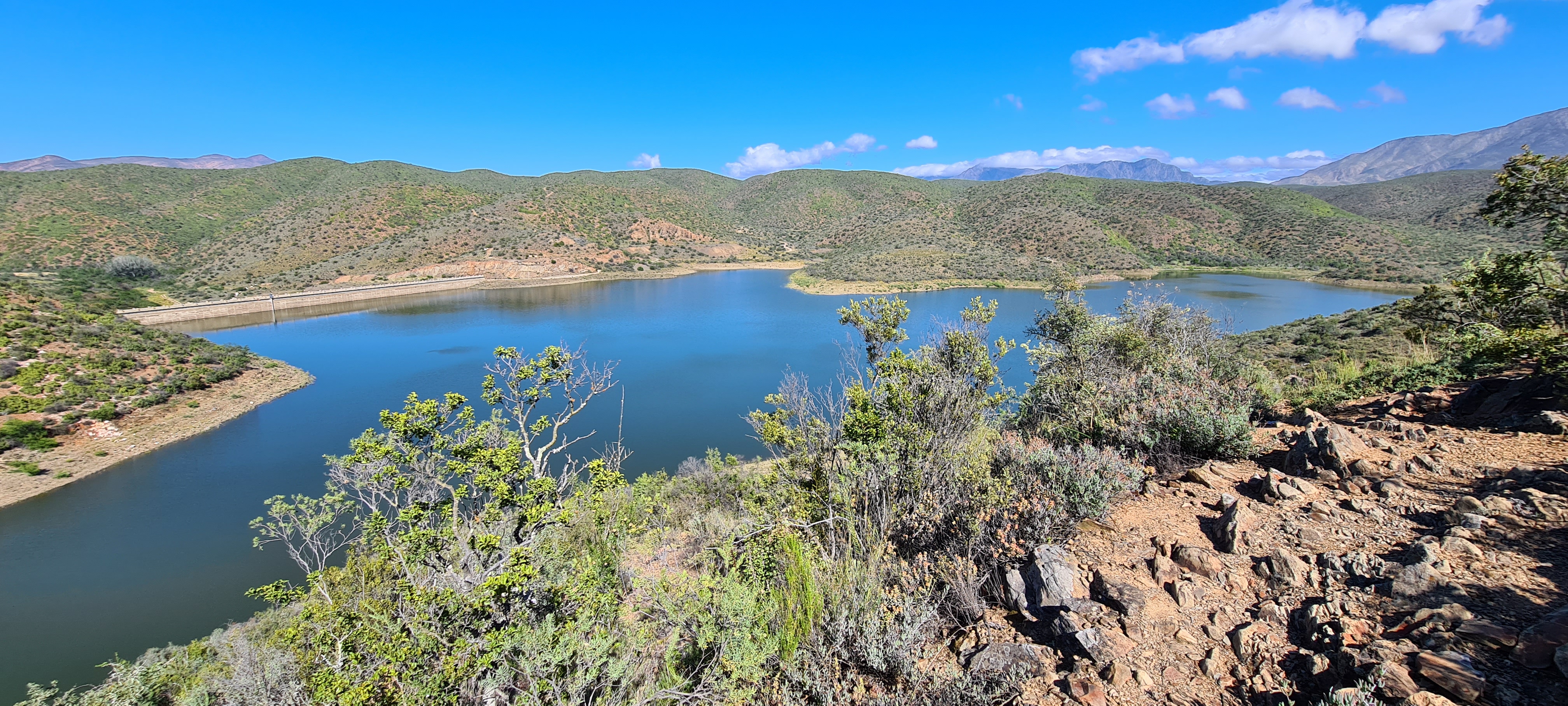 A dam wall with impoundment behind (Photograph by Christa Lombard) Has the upstream catchment been impounded (e.g., by a dam) in a way that could affect the peatland? |